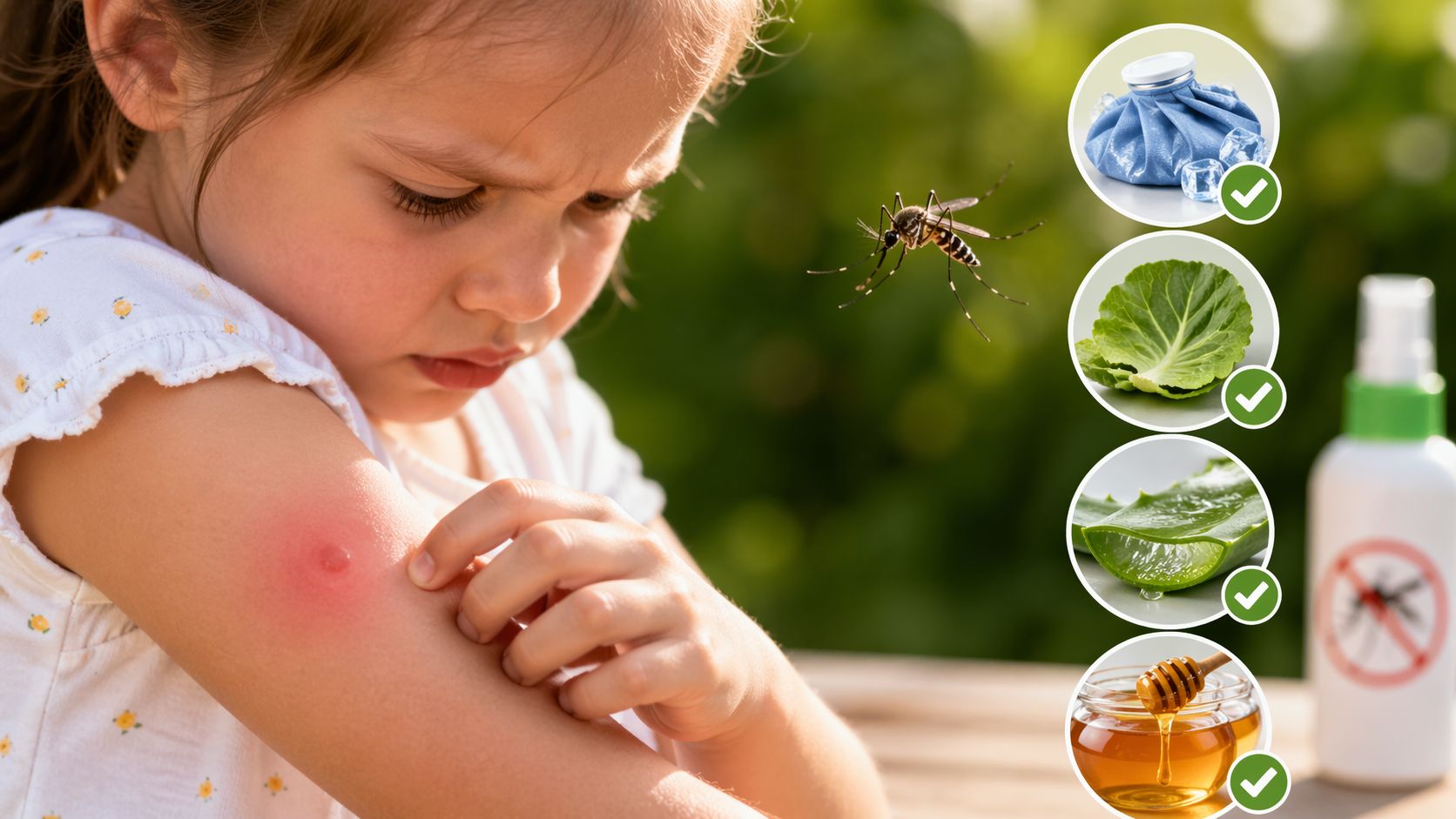
Mosquitoes are the bane of every parent’s summer. It’s all down to the female – she needs blood to lay her eggs. When she bites, she injects a tiny amount of saliva under the skin. This saliva contains proteins that the body recognizes as foreign and responds by releasing histamine. That’s exactly what causes the itching and swelling.
Some kids barely react at all – just a tiny dot. Others end up with a really noticeable bump. It mostly depends on individual sensitivity.
How to recognize a mosquito bite?
It looks quite distinctive:
- itchy bump with a red dot in the center
- mild swelling around it – especially in little ones who have thinner skin
- redness forms a red ring around the bump
- child may complain of burning or stinging
Mosquitoes prefer thin skin, so they most often go for wrists, ankles, and the neck. Unlike flea or bedbug bites, mosquito bites are usually few and scattered irregularly across the body.
When can a mosquito bite be dangerous?
Usually it’s just itching that goes away after a few days. But sometimes you need to stay alert.
Severe allergic reaction
Some children react to mosquito saliva much more strongly. Along with local swelling and itching, you may see:
- widespread rash or hives across the body
- swelling that doesn’t go down for several days
- general malaise, nausea, dizziness
- wheezing, difficulty breathing – that’s a red flag
With symptoms like these you need to go to the ER or call an ambulance immediately – it could be anaphylactic shock.
Infection
The most common complication? A scratched spot. Kids scratch instinctively, break the skin and let bacteria in. Sometimes antibiotics are needed.
Home remedies for mosquito bites
You don’t always have to rush to the pharmacy. Grandma’s tried-and-tested methods:
Cold compress
Fastest relief: ice wrapped in a cloth, a chilled gel pack, even a cold bottle. Cold constricts blood vessels, reduces swelling and eases itching. Apply for a few minutes, repeat when the itching comes back.
Cabbage leaf
Grandma’s remedy that really works. Lightly pierce a white cabbage leaf with a fork so it releases its juice, then apply to the itchy spot. Reduces swelling and soothes itching.
Aloe vera
Aloe vera gel is a hit for irritation. It cools, reduces inflammation and speeds up healing. If you have a plant at home – perfect. Cut a leaf and apply the fresh gel.
Honey
Has antibacterial properties, calms itching. A thin layer on the bump works wonders. Note: don’t use if your child is allergic to bee products.
Pharmacy products
When home remedies aren’t enough, you’ll find plenty of child-friendly options at the pharmacy.
Soothing gels and creams
Look for products with menthol (gives a cooling sensation), allantoin (regenerates skin), panthenol (moisturizes and soothes) or chamomile extract (anti-inflammatory).
Hydrocortisone
For a stronger reaction, a doctor may recommend a hydrocortisone gel or cream (0.5% – available over the counter). Quickly relieves itching and inflammation. Use for no more than a few days, don’t apply to large areas of skin.
Antihistamines
For widespread rash or really intense itching, antihistamine syrup will help – it works from the inside, blocking the allergic reaction.
When to see a doctor?
Most bites don’t need a doctor visit. But do go if:
- the bite hasn’t healed in over a week or looks unusual
- there is pus, fever or other signs of infection
- swelling is large (over 10 cm) or is getting bigger
- child has vomiting, dizziness, breathing problems
React urgently if the bite is near the mouth, throat or eyelids – swelling there can obstruct breathing.
How to protect your child from mosquitoes?
Prevention is easier than cure:
- Repellents – look for products designed for children, use according to the instructions on the packaging
- Clothing – in the evening and at night it’s worth putting on long sleeves and trousers, preferably in light colors
- Mosquito nets – window screens effectively block mosquitoes from getting into the apartment
- Remove standing water – mosquitoes breed in containers where water stagnates
- Fan – mosquitoes are poor flyers, an air current effectively scares them off
Summary
Mosquito bites in children are a summer staple – harmless on their own but can make life miserable. Home remedies (ice, cabbage, aloe, honey) often do the trick. When they don’t – the pharmacy has plenty of child-friendly options: gels with menthol, allantoin, panthenol, sometimes hydrocortisone is needed.
Make sure your child doesn’t scratch itchy spots – that’s the easiest way to get an infection. And if a rash appears, breathing problems start or swelling spreads to a larger area of the body – don’t wait, see a doctor.