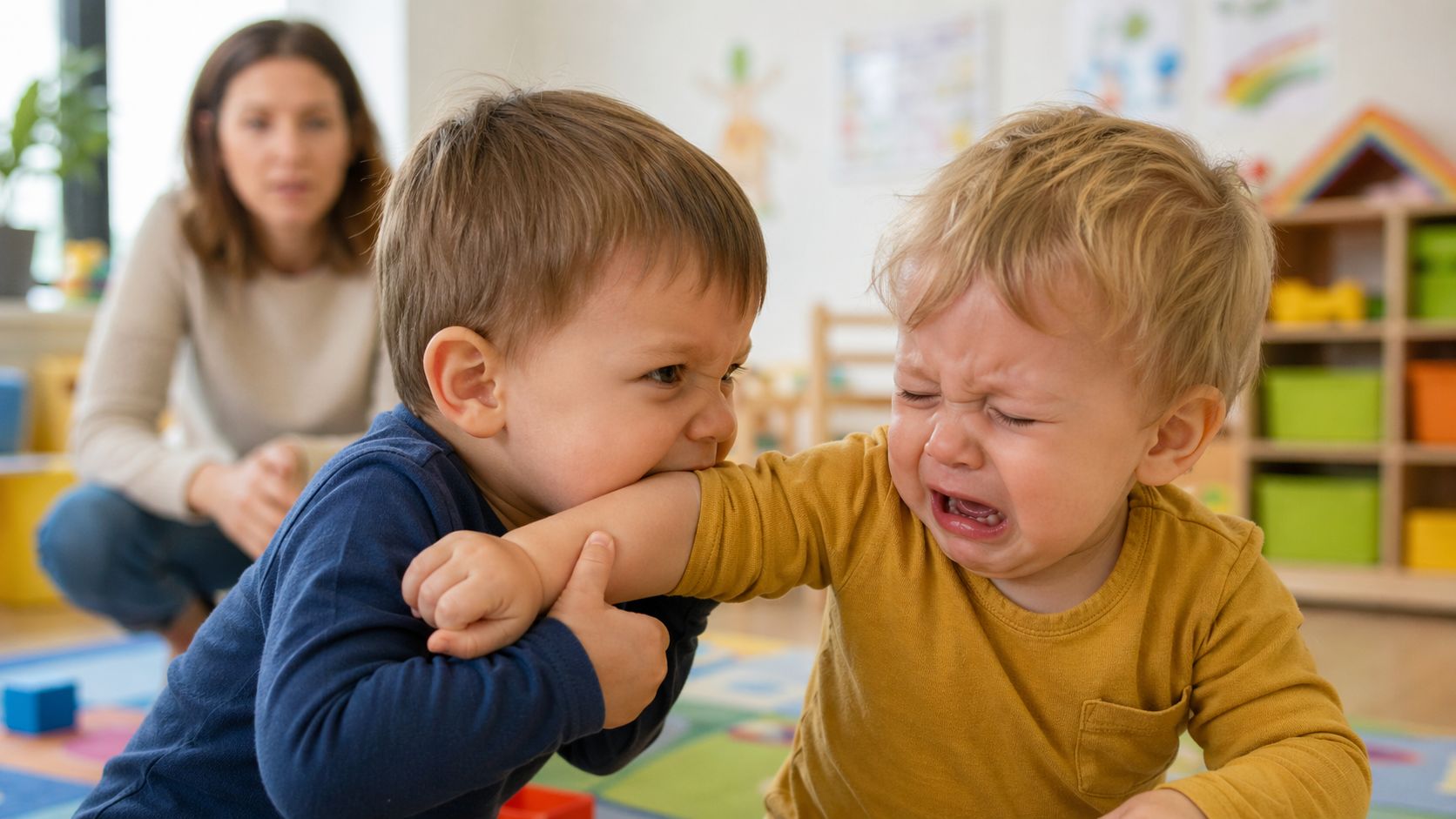
Your child bit someone again at kindergarten? Instead of blaming yourself or the little one, find out what might be behind this behavior. Many parents ask: “Why does my child bite? Is this normal? How can I help them cope with emotions?” The answer is simpler and at the same time more complicated than it seems.
My child bites – what now?
When your child bites you or other children, you may feel worried or even scared. That’s natural. But you’re not the only parent in this situation – biting is a fairly common phase in a child’s development and in most cases it can be navigated through.
Instead of looking for someone to blame, try to think about what your child is communicating this way. Patience and observation are key.
Most Common Causes of Biting
You might think your child bites because they’re naughty or does it out of spite? Rarely is that the case. The reasons can be surprising.
Emotions your child can’t name
This is the most common cause. A toddler who can’t yet express in words what they’re feeling looks for another way. Biting can be a response to fear, frustration, anger – sometimes even to excessive joy. Instead of talking, the child simply acts.
Biting isn’t the only form. The child may also push, hit, or hug too hard. It all depends on what exactly they’re feeling and what’s missing in that moment.
Sensory Processing Disorders
More and more children have difficulty processing stimuli from the world around them. The brain can’t handle sensory information and reacts with hyperactivity, concentration problems, or – quite the opposite – withdrawal and lethargy. In both cases, it’s worth observing your child and consulting a specialist if you have doubts.
Too little movement and stimulation
Children who spend a lot of time indoors may have excess energy with no outlet. Biting can be one way to release tension. Let your child run, climb, get dirty – the old saying “a dirty child is a happy child” isn’t outdated at all.
Frustration and anger
Young children are only learning to cope with new situations. When they feel anger, fear, or are simply tired, they don’t yet have the tools to manage it. That’s why they bite, scratch, or hit – it gives them temporary relief, even if it doesn’t solve the problem.
Fear and stress
Sometimes biting is a message: “I’m scared.” Notice if such behaviors appear after a move, after a change in routine, or in the first weeks of daycare or kindergarten. For a child, a new environment is a real challenge – peers may seem like a threat, not friends.
Difficulty speaking
Children who can’t yet speak well use other means. When a toddler bites a friend who took their toy, they’re trying to say “Give it back to me.” Biting is their way of regaining control over the situation – it works, so they’ll repeat it.
Teething
In infants, biting has a completely different cause – itchy and painful gums. Everything ends up in their mouth, including your hand. Chilled teething toys and gels from the pharmacy can help get through this period.
Imitation
Children learn through observation. If there’s tension, yelling, or aggression at home, the toddler has no templates for healthy emotional expression. Make sure they see calm and respect around them – this will help, even if you don’t notice changes right away.
Brain development and young child’s behavior
Know that hitting and biting in a one- or two-year-old is usually not spite – it’s an immature nervous system. The brain at this age is still developing and can’t handle strong impulses. The child understands that it’s not allowed, but can’t yet stop themselves. This is a normal developmental stage – difficult, but normal.
What to do when a child bites?
Don’t punish – it doesn’t work
Research is clear on this matter: physical punishment doesn’t teach a child to control emotions. Quite the opposite – it can deepen the problem in the future. Instead of yelling, calmly say: “Biting hurts.” That’s it. Short, without lectures that nobody will remember anyway.
Instead of punishment – teach something else
You can show your child other ways to express anger or frustration: say “stop!” loudly, stomp your foot in a safe place, or use simple breathing exercises – for example, “inhale the scent of a flower and blow out like a candle.” Sounds silly? Kids love it and it really works.
Cooperate with the kindergarten
When biting happens at a facility, approach the staff with an open mind. Educators also can’t always intervene in time – biting lasts a fraction of a second. Instead of looking for someone to blame, figure out together what might help. Every behavior has a need behind it – even if you don’t yet know what it is.
Ensure routine and avoid labels
Children like predictability. When they know what comes next, it’s easier for them to calm down. Also observe what triggers aggression – sometimes the culprits are tiredness, hunger, or too many stimuli at once. And very importantly: don’t call your child “aggressive.” Such labels reinforce patterns instead of changing them.
When to seek help?
If biting doesn’t stop after the third birthday or is very intense, it’s worth talking to a specialist. A child psychologist, sensory integration therapist, or educator – any of them can help find the cause and provide appropriate support.
Summary
Biting in children is a topic that causes a lot of worry, but it’s worth remembering that it’s a fairly common behavior. Behind every instance there’s a reason: the child can’t name their emotions, feels frustrated, stressed, has sensory disorders, or simply lacks movement and stimulation.
Instead of punishment, choose patience and teaching new ways to cope with emotions. Observe, talk, cooperate with kindergarten, and don’t hesitate to seek help if something concerns you. Your child doesn’t bite to drive you crazy – they’re trying to tell you something.